
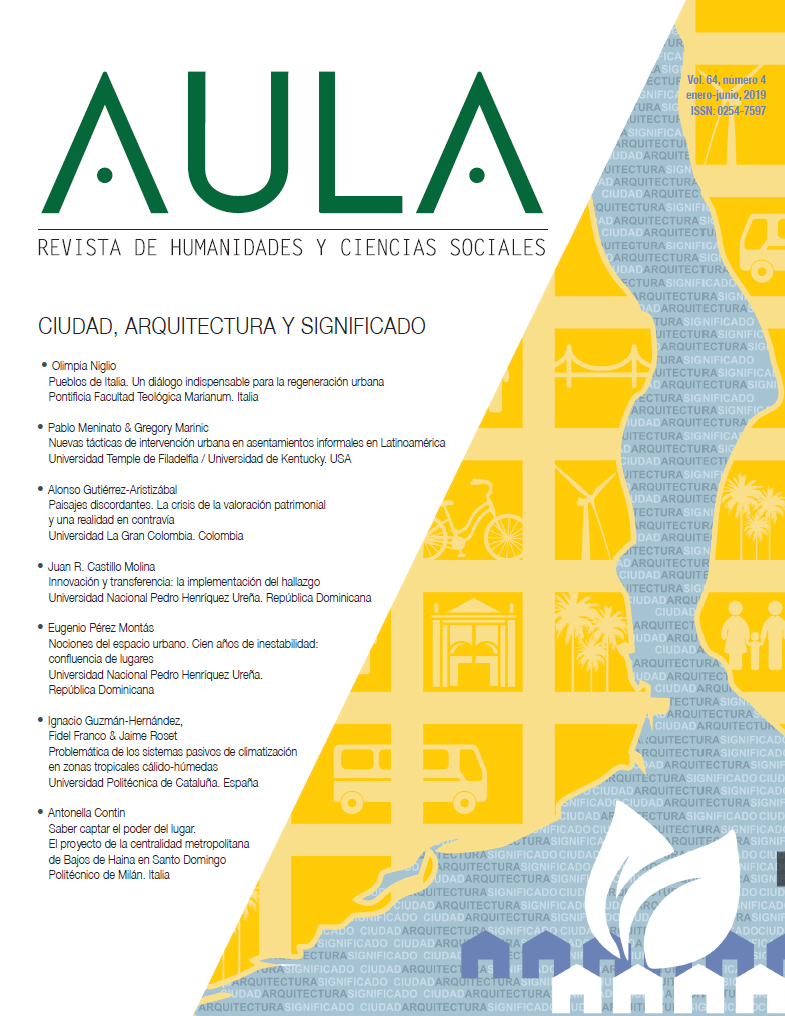
Published 2019-06-26 — Updated on 2023-06-01
Versions
- 2023-06-01 (2)
- 2019-06-26 (1)
Keywords
- cities,
- informal urbanism,
- intervention tactics,
- participatory process,
- poverty
- slums ...More
Copyright (c) 2019 AULA Revista de Humanidades y Ciencias Sociales

This work is licensed under a Creative Commons Attribution 4.0 International License.
How to Cite
Abstract
Beginning in the second half of the twentieth century, most Latin American countries experienced a dramatic mass migration of impoverished people moving from rural areas to informal settlements located at the urban periphery. Despite the overcrowding and extreme poverty, access to jobs, education, health facilities, and public transportation are provoking a continual expansion of those settlements. This study examines how various Latin American architects -Teddy Cruz, Jorge Jáuregui y Flavio Janches- are developing new urban design tactics supported by the analysis and understanding of the context, the revalorization of the community’s cultural identity, and the participation of multiple agencies associated to the project, such as residents associations, community leaders, NGOs, and government representatives.
References
- Gorelik, A. (1998). La grilla y el parque: espacio público y cultura urbana en Buenos Aires, 1887-1936. Nacional de Quilmes.
- Janches, F. (2012). Public Space in the Fragmented City [Espacio público en la ciudad fragmentada]. Nobuko.
- Lepik, A. (2010). Small Scale, Big Chance: New architectrures of Social Engagement [Pequeña escala, gran oportunidad: nuevas arquitecturas de compromiso social]. Museum of Modern Art.
- McGuirk, J. (2014). Radical Cities: Across Latin America in Search of a New Architecture [Ciudades radicales: en América Latina en busca de una nueva arquitectura. Verso Books.
- Machado, R. (Ed.). (2003). The Favela-Bairro Project: Jorge Mario Jáuregui Architects [Proyecto Favela-Bairro: Jorge Mario Jáuregui]. Harvard University Graduate School of Desing.
- Sarmiento, D. F. (2018). Facundo o civilización y barbarie. Grupo Editorial Penguin Random House. (Obra original publicada en 1845).